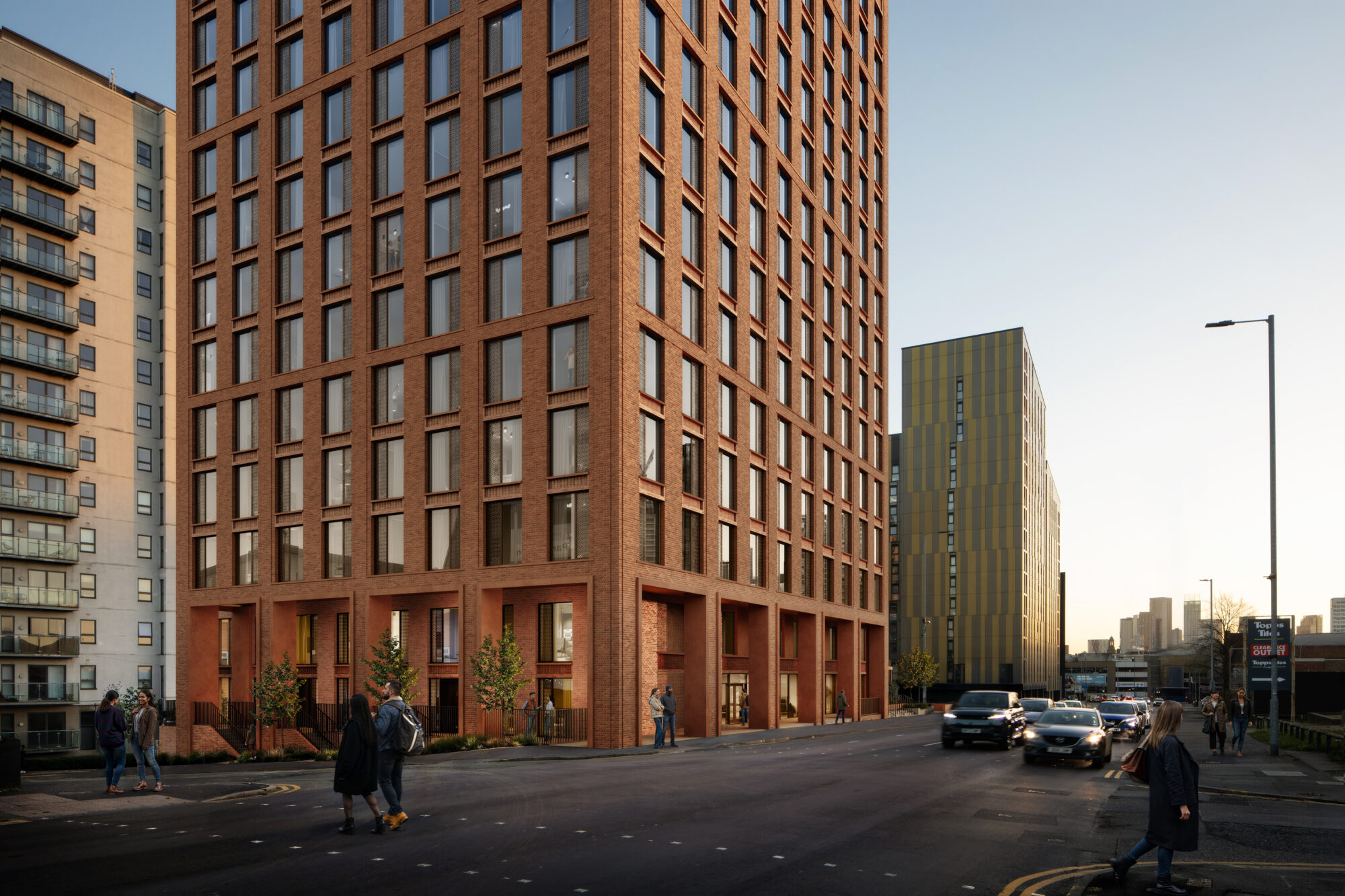
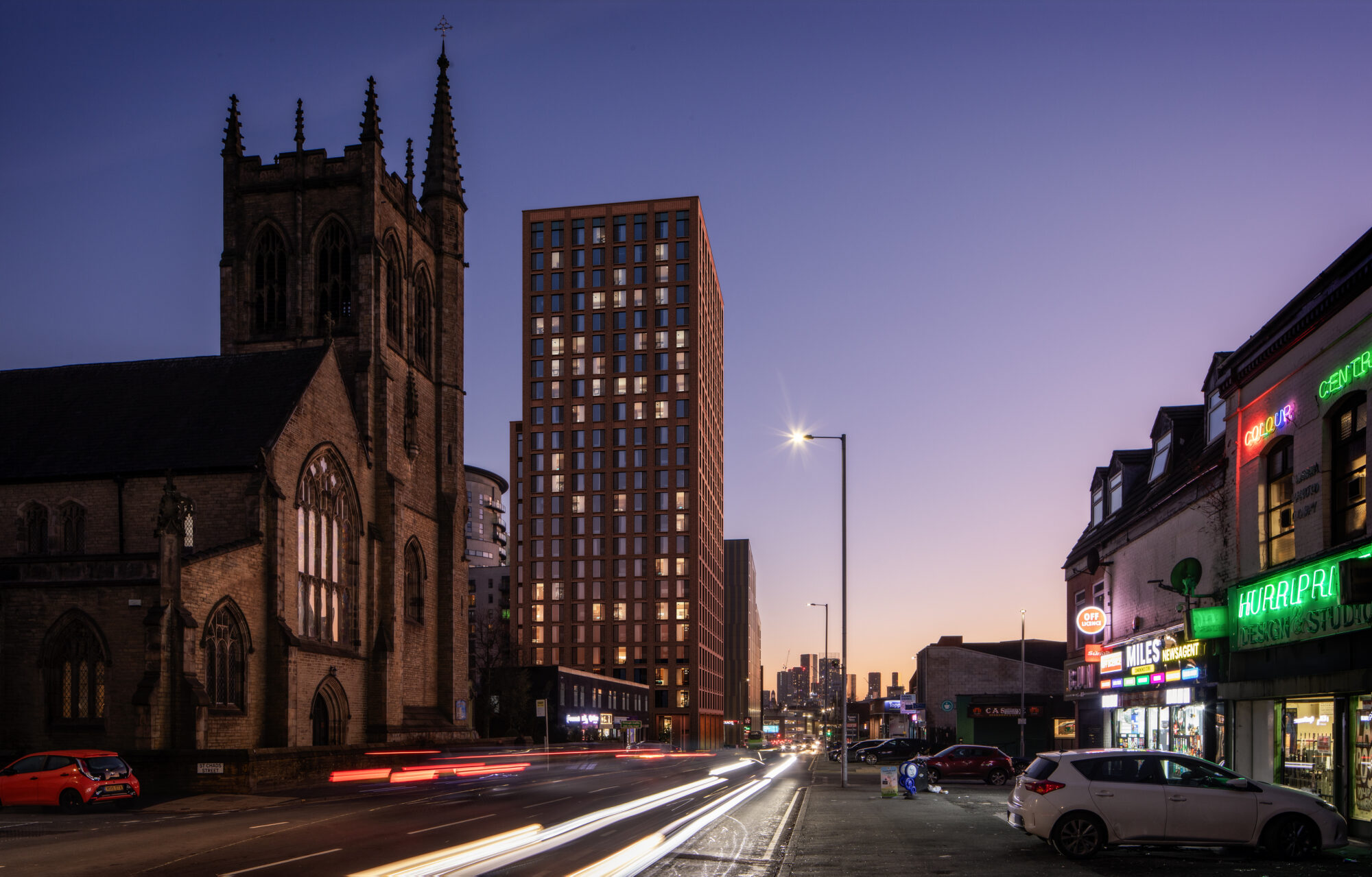
Lord Street is a 251-home, 24-storey apartment and townhouse development located at a key gateway into Manchester City Centre. It is a landmark project in the continued regeneration of the Green Quarter neighbourhood and has been designed to address the Strangeways and Cambridge SRF.
Project Credits
- Linear living / Peak PropertiesClient
- ManchesterLocation
- Residential Sectors
- Architecture, Principal Designer Services
- 251 homesSize
- Jan 2025 - ongoingProgramme
- Planning SubmittedStatus
- -Certifications
- Our StudioCGIs
24-storeys
tall
251
townhouses and apartments
7 (M4)3 wheelchair-adaptable
and 244 M4(2) units
251 space
bike storage
The Brief & Design Development
Located at the northern gateway into Manchester City Centre, Lord Street presented a unique opportunity to complete the Green Quarter and shape a key arrival point into the city. The 0.2 ha brownfield site, adjacent to the Strangeways and Cambridge Strategic Regeneration Frameworks (SRFs), called for a development that would improve public realm, strengthen connectivity, and promote sustainable urban living.
Previously home to retail and commercial units fronting Cheetham Hill Road, the site had seen planning for a 192-apartment scheme, but AEW was tasked with rethinking the potential to deliver more homes and a stronger civic presence.
From the outset, we worked closely with the local community, councillors, and Manchester City Council planners. Two public consultation events and a series of pre-application discussions shaped a design that balances ambition with context, ensuring the scheme enhances the streetscape, complements the Green Quarter, and responds sensitively to its surroundings. Sustainability, connectivity, and quality of life were the guiding principles throughout.
The scheme has been carefully developed to respond to its urban context.
Key design considerations include:
- A defined base, expressed through a colonnaded plinth with rusticated detailing and horizontal banding.
- A rhythmic façade composition, using repeating architectural elements and a modular symmetry.
- Stacked window openings, arranged on a consistent grid to reinforce order and proportion.
- A contextual material palette, with predominantly red brick complemented by stone and precast detailing.
- Vertical piers, which emphasise the building’s height while grounding the elevation.
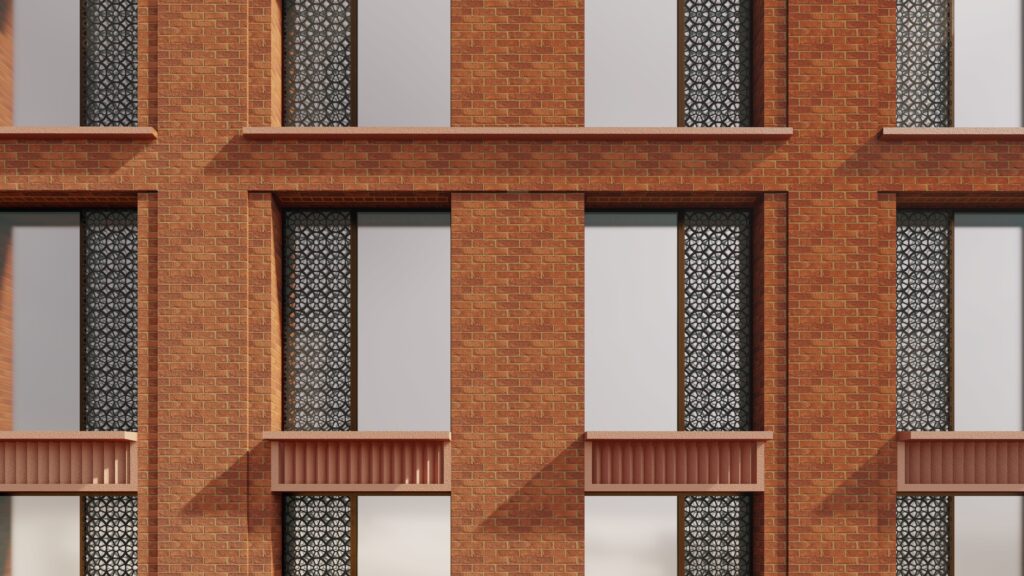
- Typical Bay
The Outcome
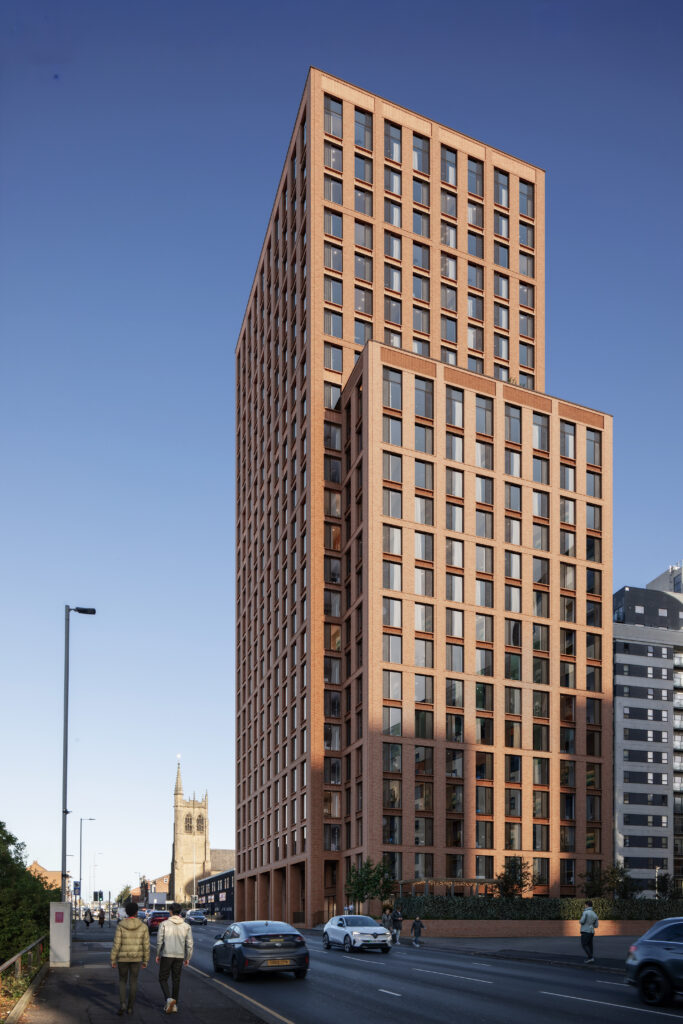
The final scheme delivers 251 high-quality, flexible homes in a stepped 24-storey building. Four townhouses at ground level engage directly with Lord Street, while the main block maximises dual-aspect apartments and open-plan layouts for modern, adaptable living.
All apartments meet the Nationally Described Space Standards (NDSS) and Manchester’s Emerging Pace Standards, with M4(2) Accessible and Adaptable dwellings as a baseline, including seven M4(3) wheelchair-adaptable units. Residents will have access to a communal lounge and adjoining roof terrace on the 15th floor – with three apartments on the same level also benefiting from private terraces.
The building’s height and massing respond carefully to the surrounding context. A predominantly red brick façade, accented with stone and precast detailing, draws on the area’s historic character. Ground and first-floor setbacks create a colonnaded frontage, encouraging active street-level engagement.
Practical design considerations were embedded throughout. The façade minimises projections and is designed for drone-based cleaning, reducing the need for abseiling or roof access and ensuring long-term maintainability.
Team Members
Phil Hepworth
Director
Ben Robinson
Associate Director
Ben Smith
Associate
Kate Silvester
Architect