Insight: BREEAM Version 7 Update – A Webinar Wrap Up
Share Article
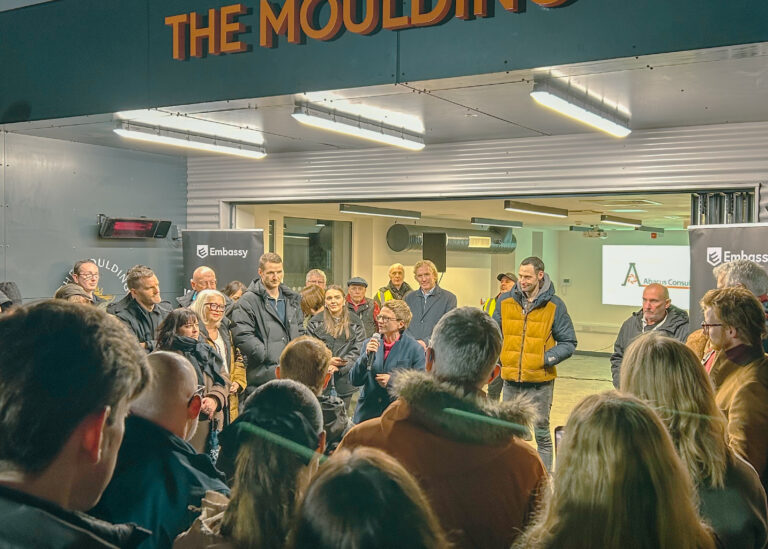
In November, we hosted a webinar exploring the changes coming with BREEAM Version 7. Delivered by Peter Bartley, our head of sustainability, the discussion focused on the key updates and what project teams need to understand as they take effect.
BREEAM continues to be an important tool in delivering sustainable buildings. It provides a structured, evidence based framework that lifts projects above business as usual. Buildings designed through the process tend to operate more efficiently and offer better comfort. Version 7 pushes this further by bringing the scheme closer in line with the UK Net Zero Carbon Building Standard.
With the deadline to register projects under Version 6 approaching on 27 January 2026, our webinar offered essential guidance for anyone planning new development in the new year. For those who couldn’t attend, we’ve summarised some of the key highlights below.
The headline changes
In simple terms, Version 7 shifts the focus from design intent to real-world performance. Several categories see major updates, particularly energy, materials and ecology.
1. A complete overhaul of energy
What’s changed: energy performance expectations are higher and must be demonstrated earlier.
The energy category has been reworked to tighten performance expectations and improve alignment with net zero standards.
- There’s now a more rigorous requirement for passive design. This will be assessed through analysis of the building form and fabric – requiring more detailed modelling at an early design stage.
- There’s no longer a requirement to carry out a low and zero carbon feasibility study. Instead, projects will need to show that any renewable systems are installed by accredited providers and that they meet specific performance standards.
- The bar for securing the renewable energy performance credit has been raised. To achieve it, projects will now need to include solar PV covering at least 50% of the building’s ground floor area.
- There’s an enhanced and proportional approach to dealing with equipment energy.
- Smart EV charging, battery storage and smart HVAC controls can now all contribute to BREEAM scores where they help buildings use energy at the cleanest and cheapest times.
Overall, the category encourages teams to design buildings that work harder, respond intelligently to the grid and deliver meaningful reductions in operational energy.
2. Stronger lifecycle assessment requirements
What’s changed: more accurate carbon measurement across a building’s full lifespan.
Lifecycle assessment has been rebalanced to focus more on accurate whole life carbon figures and less on generating multiple design options.
- A new as built stage has been added.
- Early design stage assessment now takes place up to 20 days post planning, rather than before planning.
- Performance bands for embodied carbon have been introduced.
While this additional analysis will add time and cost for most schemes, it provides a much clearer picture of long-term carbon performance.
3. Ecology becomes significantly more challenging
What’s changed: higher thresholds and fewer easy wins.
Ecology is one of the most impactful changes in Version 7 and will alter how projects approach biodiversity net gain.
- Although the structure is simpler, the credit thresholds have shifted quite dramatically.
- A 10% biodiversity net gain now secures fewer credits than under Version 6, with a maximum of one credit available.
- Projects must demonstrate uplift across both overall site area and hedgerows, which may require changes to landscape strategies.
- Sites that start with very low biodiversity no longer get an easy win. The updated calculations remove the percentage based bias, creating a more balanced assessment across different site types. Projects with constraints and high ecology baselines may need to consider offsite measures or invest more heavily in building performance to compensate.
4. More complex daylight and lighting assessments
What’s changed: greater reliance on detailed modelling.
Daylight assessments now rely on detailed simulations based on site specific conditions. Targets are more demanding, meaning early modelling will be essential for securing credits. Fully fitted schemes also see new lighting requirements, including systems that adjust to the time of day.
5. New focus on operational water use
What’s changed: greater emphasis on post-occupancy performance.
A new credit rewards teams that share water efficiency benchmarks with occupiers and commit to collecting post occupancy water data. This reflects a wider shift in BREEAM towards monitoring performance after once in use.
6. Transport has reduced influence
What’s changed: lower weighting, but clearer EV requirements.
Transport carries less weighting in the overall score. However, EV charging requirements become more specific, including:
- 10 percent active EV charging
- 20 percent passive provision
- An additional credit where active chargers are upgraded to 22 kW
What this means for future projects
The combined effect of these changes is significant. Ecology, energy and whole life carbon will have a much stronger influence on final ratings.
Project teams can expect:
- ‘Very Good’ becoming the more common rating, with Excellent requiring a noticeable uplift in performance.
- Higher costs for fully fitted schemes targeting top ratings due to increased modelling, analysis and specification requirements.
- Greater pressure on sites with high biodiversity baselines and limitations for onsite enhancements to either invest in off-site ecological enhancement or compensate through building performance.
- Shell only schemes being simpler but unable to target Outstanding.
Teams that embrace Version 7 early will be in a stronger position once the transition is complete. Early pilot projects will also help establish the most cost-effective strategies before the scheme becomes mandatory for all new registrations.
Got questions?
Thanks to everyone who joined the webinar. It was great to explore the changes in detail and discuss what they mean for live and future projects.
If you have questions about how BREEAM Version 7 could affect your scheme or would like to discuss early registration or pilot projects, we’d be happy to help. Please get in touch at pbartley@aewarchitects.com.
Want to watch the webinar?
If you missed it, watch the webinar here.