Insight: Four Key Takeaways from SHEDS UK 2026
Share Article
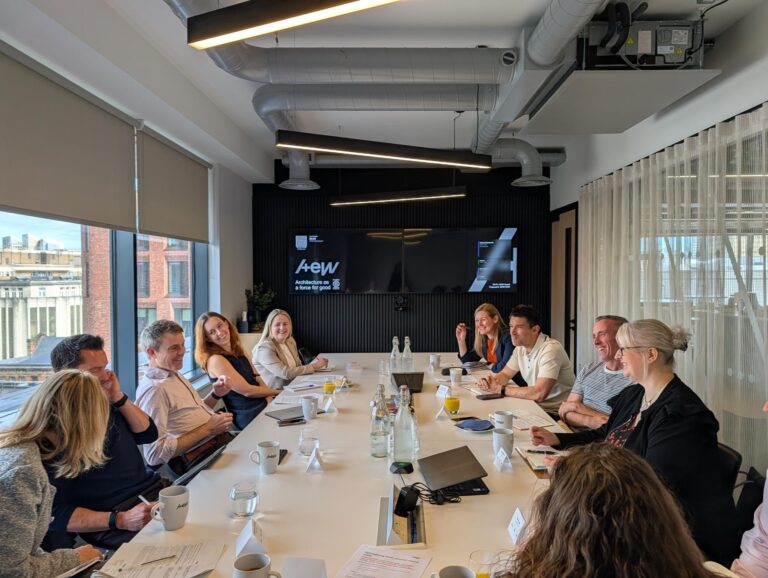
At SHEDS UK’s inaugural conference, we had a crack team consisting of Director Alex Southall and Associate Director Dan O’Hara attending on the ground to soak up the conversation. Focussing on the UK’s industrial and logistics property sector, it’s a great opportunity to stay ahead of the curve on movements within the industry.
We all know that the macro-economic backdrop continues to create significant challenges for the industry, but we’re a resilient sector and there are still opportunities to be had. This, and some positive indicators justify cautious optimism.
In this short article, Dan O’Hara touches on his four big takeaways from the event.
-
Challenges remain, but market sentiment is on the up
There’s clearly no lack of appetite for more I&L development and that’s an encouraging sentiment given how slow other parts of the built environment are. The main problem is that economic uncertainty and difficulties securing funding are still holding the sector back.
We’ve seen relatively little speculative development reaching site over the past two to three years, both in the North West and nationally. At the conference, Cushman & Wakefield’s Sally Bruer brought to light some positivity emerging from the numbers. It’s still early days and further headwinds are almost inevitable, but occupational demand has started to recover and rental growth is moving in the right direction.
Adapting to and operating in a more uncertain world is a real challenge for a lot of developers and decision making is a delicate balancing act between that uncertainty and the improving outlook. There’s also some risk around supply shortages, in part due to the lower number of new developments coming forward, particularly for larger requirements in the market. This is why we need a very good understanding of localised demand.
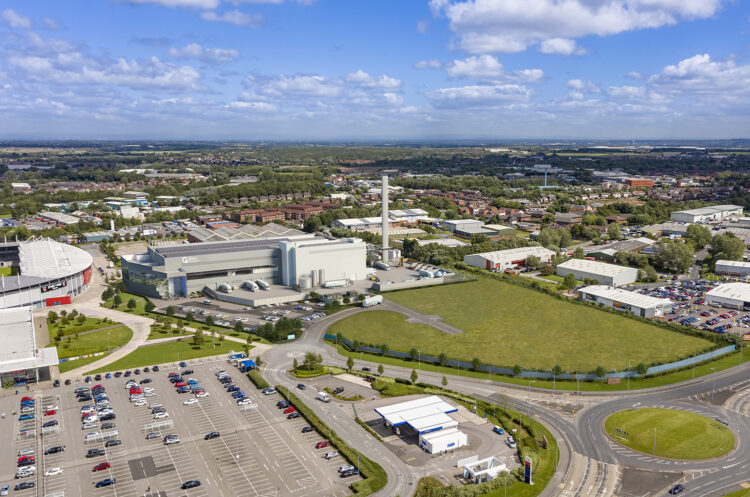
Glass Futures, St Helens
-
Manufacturing and defence could drive future demand
It’s a different story for manufacturing and end-user-led schemes, which have continued to show good upwards progress.
Advanced manufacturing is a huge area of opportunity, particularly as local authorities often want to attract higher-value industries and employment to their respective areas.
In a conversation that seems to have been echoed at Shedmasters earlier in the year, the defence sector could also become an increasingly significant driver of demand in the industry. Government investment is strongly anticipated as well as a growing export market to Europe. Meanwhile, there’s a noticeable increase in the take-up of UK logistics space by Chinese e-commerce businesses. This also points to another potential source of longer-term, structural demand.
For architects like us, evolving markets bring new considerations to the table. More specialised manufacturing and defence facilities are likely to require bespoke designs and a much greater emphasis on security, resilience and the flexibility to accommodate rapidly changing technologies.
-
Automation is already driving change in industrial spaces
AI and automation are massive changemakers in any industry, but especially so in industrial and logistics. Quite simply, they’re having a transformational effect on how industrial and logistics facilities operate.
Increasingly sophisticated systems mean clear internal heights to underside of haunch will only increase so occupiers can use floorspace as efficiently as possible. It also means more power and, in many cases, servicing arrangements more concentrated to serve high throughput facilities.
Interestingly, automation isn’t necessarily increasing the amount of floorspace many of these occupiers require. It is, however, changing how that space, and particularly the volume within a building, is used.
For existing industrial stock this can present a bit of a challenge. Limited heights or constrained service yards will restrict opportunities for refurbishment and reuse for some occupiers where their operations are heavily automated.
For new developments, the story is quite different. All it does is reinforce the importance of understanding occupier requirements early and designing buildings that can accommodate evolving technologies and operational needs through flexibility and resilience.
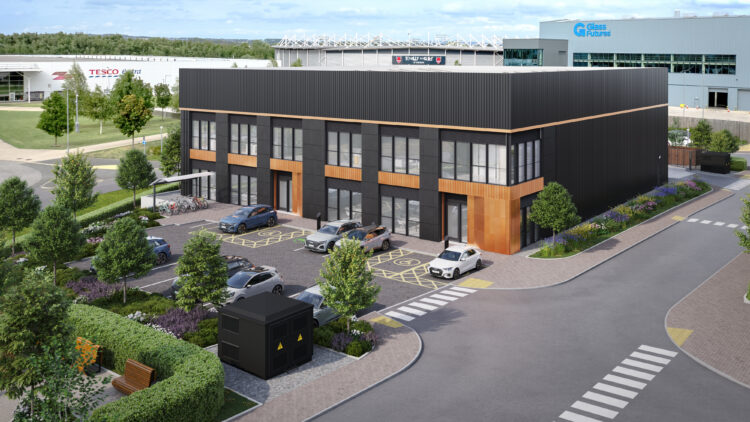
Project Halo, St
-
Quality and sustainability are fundamental expectations
It’s now almost a given that industrial and logistics spaces be designed with sustainability and quality at the forefront and this is a positive, notable shift that has accelerated in more recent years.
Occupiers want to attract and retain skilled employees so there’s a growing recognition of the value of high-quality working environments. Realistically, this can be achieved with relatively modest design interventions, like improved natural light and enhanced office finishes. Even external finishes, better landscaping and staff amenities can make a significant difference to the overall quality and attractiveness of an industrial workplace.
The expectations on sustainability have likewise evolved massively. Measures that were once considered unique selling points are increasingly becoming standard requirements for modern Grade A developments. This is a really positive change and proof that businesses are thinking more and more about how to lessen their impact on the environment.
Accreditations such as BREEAM Excellent and Outstanding, whole-life carbon assessments, improved fabric and energy performance plus provision for future electrification are all examples of common considerations in the design process for many industrial and logistics projects.
The positive challenge that arises out of this change is for developers and design teams to integrate these requirements from the outset, creating buildings that meet today’s expectations while remaining adaptable to future demands.
A critical part of the conversation on sustainability must be existing stock. Clearly, it often isn’t cost effective or sustainable to demolish and replace older buildings. However, whilst these units may not be in prime locations, many will have sufficient height, spans and loadings to serve the mid box and smaller unit markets, particularly for last mile logistics in more urban areas. Refurbishing this stock with new envelopes and MEP installations to meet the improved EPC requirements of the future won’t be easy but it does represent an opportunity where there is demand.
Looking to the future of the sector
When you compare the discussion from Shedmasters earlier in the year and Sheds UK in September, it’s reassuring to observe a huge amount of overlapping opinion, proving that there’s broad agreement across the sector about the challenges, opportunities and direction of travel.
For us as architects, it’s a case of working closely with developers and occupiers to drive more refurbishment and create modern, high quality and sustainable industrial and logistics spaces that can accommodate current and future requirements in a rapidly evolving and increasingly sophisticated sector.