The UK Net Zero Carbon Buildings Standard and what it means for building design
Share Article
Net zero is a phrase that’s sat at the forefront of discourse in the built environment for decades. Planning policies reference it, developers promote it and buildings lay claim to it.
For all the chatter around it, there’s never been a single, agreed definition of what a net zero carbon building actually is.
This ambiguity is a problem, creating confusion and in some cases opening the door to claims that are difficult to verify. If every project is working to a slightly different definition, the term quickly starts to lose meaning.
That’s why the UK Net Zero Carbon Buildings Standard is bringing standardisation to the table, providing a consistent, science-led definition of what a net zero carbon building looks like in practice.
Let’s explore how this affects building design in the years ahead.
Ambition vs accountability
The Standard has been developed through collaboration between a wide range of organisations across the industry. Professional bodies, engineers, architects and sustainability specialists have all contributed to shaping the framework.
What the Standard requires
In simple terms, the Standard sets clear expectations for how buildings measure and manage carbon.
Projects must demonstrate that both operational energy use and embodied carbon fall within defined limits. Those limits tighten over time so new buildings remain aligned with the UK’s wider climate targets.
Just as importantly, it introduces a verification process. Rather than relying on marketing claims or design intent alone, buildings will need to demonstrate compliance through an evidence-based review carried out by independent verifiers.
Ultimately, the clarity the Standard brings emphasises the importance of accountability over aspiration and ambition.
Turning principles into real projects
Although the Standard is only now being formally launched, elements of it have already been tested through pilot projects.
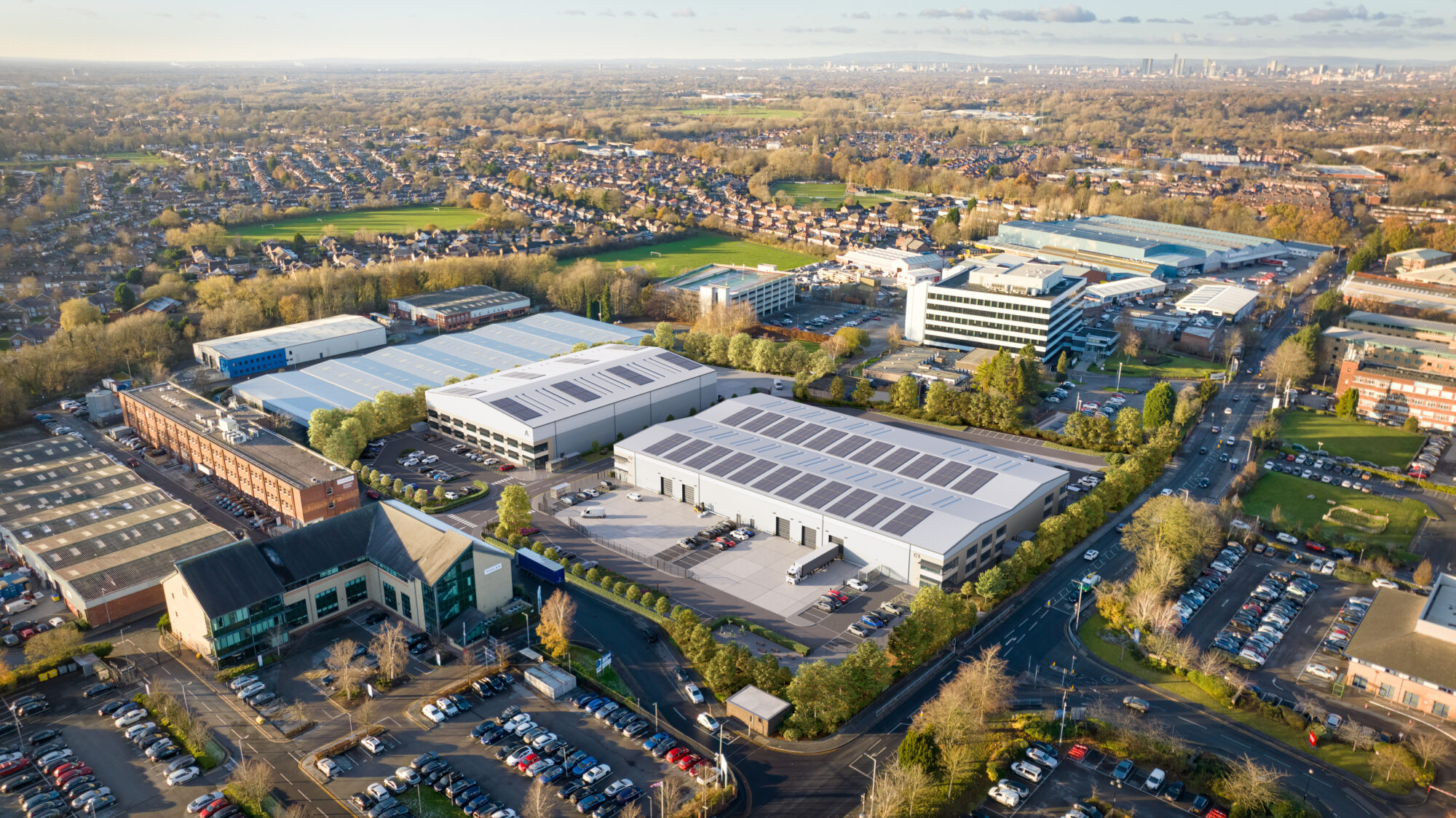
For AEW, one example is Cheadle Eco Park in Stockport.
Our design team set out to deliver a workspace that prioritises low carbon construction and operational efficiency. As part of the work, we explored approaches that align with the emerging requirements of the Standard.
A key aspect of the scheme is its structural approach. The building uses a timber frame structure, significantly reducing the embodied carbon associated with more traditional structural systems.
Choices like these make a huge difference to the end result because a large proportion of a building’s embodied carbon sits within the structural frame and substructure. Steel and concrete are usually the materials of choice for these functions and by their nature, they’re carbon intensive.
Our work on the scheme helped demonstrate how the principles behind the Standard can translate into practical design decisions that lead to impactful carbon reductions.
You can read more about the work we did at Cheadle Eco Park on our case study.
AEW’s role in shaping the conversation
The UK Net Zero Carbon Buildings Standard has been developed through extensive industry collaboration, with organisations across the sector contributing data, expertise and project insight.
Our involvement has primarily focused on the industrial and logistics sector, where we‘ve been working alongside other consultants to explore how the Standard can be applied to these building types.
Industrial buildings present their own challenges when it comes to carbon performance, particularly given their scale, structural requirements and varied operational uses. Understanding how the Standard translates into real projects has been an important part of that work.
Alongside other collaborators, we‘ve been contributing to research and sector guidance that helps interpret the Standard for these types of buildings. This is an important part of putting the principles of the Standard into action.
It has to be achievable in practice as well as looking good on paper.
Shifting the dial on how we talk about net zero
The most significant aspect of the new Standard is how it changes the way net zero claims are assessed.
Projects can seek validation that they’re “on track” at practical completion, but maintaining that claim will require operational performance data to be submitted during the first years of occupation.
This requirement reflects growing recognition from across the industry that the gap between design predictions and real performance needs to be addressed.
For clients, investors and occupiers alike, it introduces far greater transparency.
A building can’t simply claim to be net zero. It needs to prove it and the proof of the pudding is always in the eating, as they say.
What comes next
The launch of the UK Net Zero Carbon Buildings Standard does not mark the end of the conversation. In many ways, it’s a new beginning.
As more projects begin to work with the framework, the industry will continue to build a clearer picture of how buildings can genuinely align with the UK’s climate targets.
That process will inevitably involve learning, refinement and collaboration, but the introduction of a shared definition is an important step forward.
For the first time, the industry is moving towards a common understanding of what net zero really means.