Insight: Self Storage Is No Longer Just a Box on the Edge Of Town
Share Article
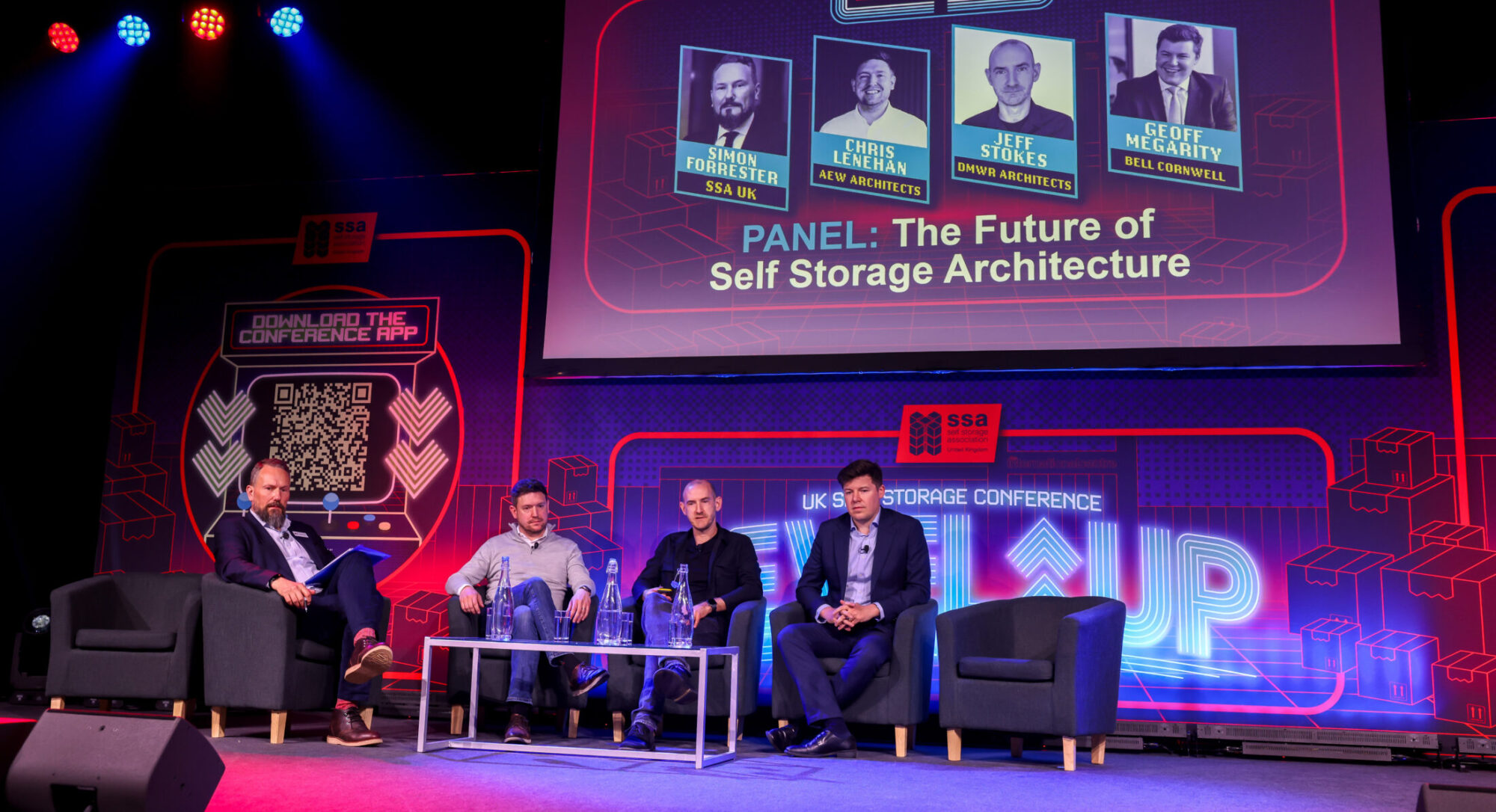
After speaking at the Self Storage Association Conference 2026, on a panel discussing the next chapter of self storage, Associate Director Chris Lenehan, outlines his thoughts on the topic in this thought piece.
You’d be forgiven for thinking designing self storage units is a doddle for architects. Where’s the complexity? Isn’t the sector defined by simple, cookie-cutter building types you find on edge-of-town sites?
Historically, self storage has been designed to be as utilitarian and efficient as possible and yes, they’re probably not what you think of when you think of considered architectural design. While that still might be true for some schemes, we’re seeing a gradual sea change in the way these buildings are designed.
That’s because the old model is no longer sufficient on its own.
As towns and cities evolve, self storage is being pulled into more central, more visible and more complex locations. This shift means we can no longer think of these buildings as operational containers.
In short, our expectations have changed.
Urban living is reshaping demand
A key driver behind this shift is a parallel shift in people’s living habits and lifestyle habits.
City and town centres are moving away from traditional retail destinations and towards leisure, hospitality and residential uses. You see this reflected in the many regeneration projects going on across the UK, like the repurposing of shopping malls we were involved with at Oldham Spindles and Stockport’s Mersey Way.
At the same time, more people are living in central locations, often in smaller homes and without access to cars. In cities like Manchester, the growth of build-to-rent over the past decade is proof positive of this growing trend.
Of course, with denser living comes less space. No loft, no garage, and limited storage. That creates a more consistent, long-term need for self storage, rather than occasional use tied to life events like moving house.
When you add to this the fact that many living in the city don’t own a car, facilities need to be easy to reach, well located and simple to use. That’s one of the reasons self storage is moving into more prominent, central sites.
Prominent locations demand better design
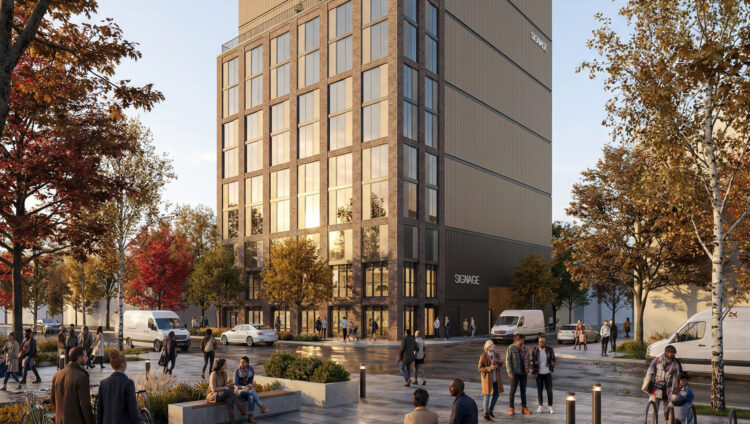
Once self storage enters these locations, the conversation around how they’re designed becomes much more nuanced and complex. What’s fit for an edge-of-town shed will not be fit for a prominent, inner city location.
Understandably, buildings that wouldn’t look out of place on an industrial estate face a very different level of scrutiny when placed in an urban setting. For one, local authorities expect development to contribute positively to the street, avoid blank facades and respond to the area’s context.
When you blend the requirements of a central location with the specific operational requirements of self storage, you start to see the challenge. Security, circulation, servicing and internal efficiency are all critical. So how do you bridge the gap?
This is where the architect earns their weight in gold. A considered design response might involve improving materiality, breaking down scale, introducing active frontage or creating a clearer and more welcoming entrance. The exact approach will vary by site, but design quality has to be part of the strategy from the outset, not something addressed later.
Mixed-use is not a simple fix
To address concerns around inactive frontage, mixed-use self storage schemes are becoming more common. In principle, they offer a way to animate the ground floor and make better use of prominent sites.
But mixed-use brings its own challenges.
Self storage buildings rely on carefully planned access, secure circulation and efficient internal layouts. Introducing other uses into the same building can create conflicts if those requirements aren’t properly understood.
Anyone who’s worked in architecture and construction knows that a scheme that works well on paper can quickly go south when complicating factors aren’t properly planned for. Mixed-use instantly requires more planning and, as designers, we have to ensure the various units are compatible and integrated.
Planning misconceptions still create barriers
Despite the evolution of the sector, self storage is still often misunderstood within the planning system. It’s frequently treated as an industrial use, with standards applied that don’t reflect how these buildings actually operate.
This can lead to excessive car parking requirements, unrealistic assumptions about cycle use and misconceptions around noise and activity levels. These issues can directly affect design, pushing schemes towards inefficient layouts or unnecessary infrastructure. This leads to masses of frustration on both sides when there’s no need for it.
The most effective way to address this is through early engagement. The pre-application stage is an opportunity to explain how self storage works, how customers use it and what level of activity can realistically be expected.
You have to have a clear and well-structured planning narrative. It should set out operational requirements, sustainability considerations and the wider benefits of the scheme. When that narrative is established early, it helps to avoid misunderstandings and support more informed decision-making.
Designing for the customer experience
The sector is competitive and that makes customer experience all the more important. People will go where the business is more visible, the service better quality and the process most streamlined.
While it’s traditionally been viewed as a purely functional service, expectations are certainly shifting. People expect more. That’s not to say we’re going to start seeing that same level of scrutiny as leisure and hospitality, but self storage needs to meet a high baseline of quality to keep up with the evolution of the industry.
As architects, we can support that through designing the building to be easy to understand and simple to use. Entrances should be clear, reception areas welcoming and circulation intuitive. Importantly, security should feel robust without being overbearing, achieving a balance between peace of mind for the customer and integration with the environment.
These are relatively simple principles, but they have a significant impact on how a facility is perceived.
Moving beyond standardisation
Standardised design has been a key part of the sector’s growth, offering efficiency, repeatability and cost certainty. But as sites become more constrained and context-driven, a purely standard approach becomes harder to apply, especially in more central environments.
Urban locations nearly always require flexibility. Constraints around scale, access, neighbouring uses and planning policy mean that buildings need to be adapted to their specific context.
This doesn’t mean abandoning efficiency altogether, but it does mean allowing for variation where it improves outcomes. A more tailored approach can support planning success, improve integration with the surrounding area and create facilities that are better suited to their users.
Early collaboration is critical
Across all of these issues, there’s one theme that reigns above all the others: the importance of early collaboration.
Engaging with local authorities, designers and consultants at an early stage allows key decisions to be tested before they become fixed. It reduces the risk of costly changes later and helps ensure that planning, operations and design are aligned.
In a sector where these factors are increasingly interconnected, there’s no other way of addressing them than a consistent, joined-up approach.
Many of the challenges associated with self storage development can be resolved early, but only if the right conversations are happening at the right time.
A more visible role for self-storage
Self storage is becoming a more integrated part of how towns and cities function. No longer hidden on the edge of the built environment, but increasingly visible within it, self storage is becoming increasingly integrated into how towns and cities function.
As designers, we have to approach our work in the sector with an understanding of:
- The need to balance operational and locational requirements
- The needs of customers
- The need to stay commercially grounded, and
- The absolute requirement of early engagement.
If we can hit those benchmarks, the future of the sector is bright.

Written by: Chris Lenehan, Associate Director